
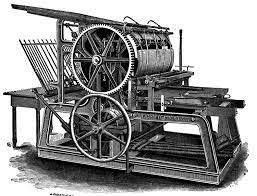
History of Indian Printing
The individual responsible for the initiation of printing in India was one Joao De Bustamante (rechristened Joao Rodrigues in 1563), a Spaniard who joined the Society of Jesus in 1556. Bustamante, who was an expert printer, along with his Indian assistant set up the new press and began to operate it.
The first press in India was introduced by the Portuguese in 1550. The first printing press of India was set up in 1556 at St. Paul's College, Goa. Father Gasper Caleza spoke of a ship carrying a printing press to sail from Portugal to Abyssinia (current-day Ethiopia) to promote missionary work in Abyssinia.
Hicky's Bengal Gazette was the first English-language newspaper published on the Indian subcontinent. It was founded in Calcutta, capital of British India at the time, by Irishman James Augustus Hicky in 1779.
(Above information is taken by Google Assistance.)
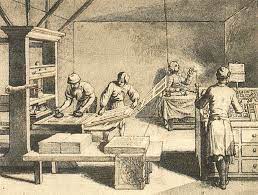
World History of Printing
The history of printing starts as early as 3500 BCE, when the proto-Elamite and Sumerian civilizations used cylinder seals to certify documents written in clay. Other early forms include block seals, hammered coinage, pottery imprints, and cloth printing.
Johannes Gutenberg, in full Johann Gensfleisch zur Laden zum Gutenberg, (born 14th century, Mainz [Germany]—died probably February 3, 1468, Mainz), German craftsman and inventor who originated a method of printing from movable type.
Goldsmith and inventor Johannes Gutenberg was a political exile from Mainz, Germany when he began experimenting with printing in Strasbourg, France in 1440. He returned to Mainz several years later and by 1450, had a printing machine perfected and ready to use commercially: The Gutenberg press.